
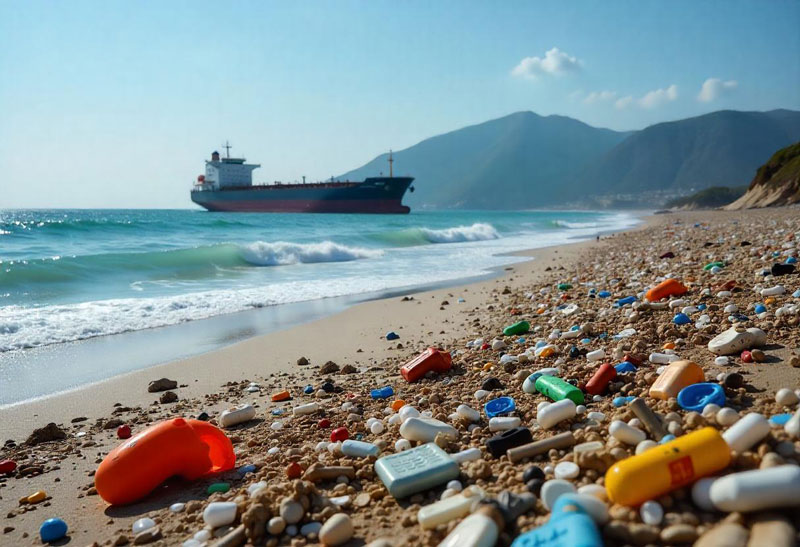
Although European legislation continues to move towards a more sustainable model, at a global level we still have a long way to go. In 2022, the Spanish legislator took a small step towards this goal, by transposing a European Directive, 2008/98/EC of the European Parliament and of the Council, of November 19, 2008, on waste, thereby managing to increase tax revenue.
However, the effects of these measures are still not completely clear and must be analyzed more precisely in the coming years, in the following five years, always with an eye on the famous Agenda 2030, which pursues a greener Europe and which will require important changes to current business models.
Coming to the subject of regulations, if we read the explanatory statement of Law 7/2022, of April 8, we can see that its main purpose is to establish the bases for a circular economy, through basic legislation on waste, as well as to contribute to the fight against climate change and the protection of marine ecosystems.
In the field of international trade, the central point is regulated in its Title VII, where a series of measures are established to encourage the circular economy and among which we can find a special tax on non-reusable packaging.
This tax can be presented to the public as a “new companion” to the Value Added Tax (VAT) and Tariff (DUTY), at the time of making an import, and it will be recorded in box 47 of the DUA (place where the calculation of taxes is specified) and must be settled fiscally
using form 592. More than a year after its entry into force, we can see that it is a small tax (0.45 euros per net kilogram of non-recycled plastic), but with a fairly significant internal bureaucracy.
After this brief introduction on the nature of the tax, it is necessary to analyze some of the complications that it poses, because for example, in the case of successive acquisitions and transformations (plastic supplier-manufacturer-buyer/exporter), it is difficult to justify that the tax has been paid by the plastic supplier and thus request a refund when carrying out an export, since there are different independent legal relationships.
Another problematic point is to evaluate whether the imposition of a tax is sufficient to curb the use of plastic, or to ask whether it has come into force at the right time, since any detail in terms of costs can put our business out of play, and of course, paying more money to the treasury will not help its development at all.
What is more, the legislator himself also divides imported plastic between reusable, which would not be subject to the tax, and recycled, in this case, it would be subject but exempt. In the latter case, as of this year, the taxpayer is required to have a certificate from an accredited entity (ENAC).
Faced with these bureaucratic and certification complexities, many companies choose to declare all plastic as non-recyclable and pay this tax in full, without questioning it and without worrying about whether the amount to be paid will increase in the future.
It is therefore clear that we are on the starting ramp towards new and very demanding legislation, essentially focused on the objective responsibility of companies in terms of pollution, regardless of where they decide to produce; after all, we only have one planet and we must take off the blindfold at a global level, raise awareness in order to preserve it and guarantee the survival of humanity.

